Jake Bronstein
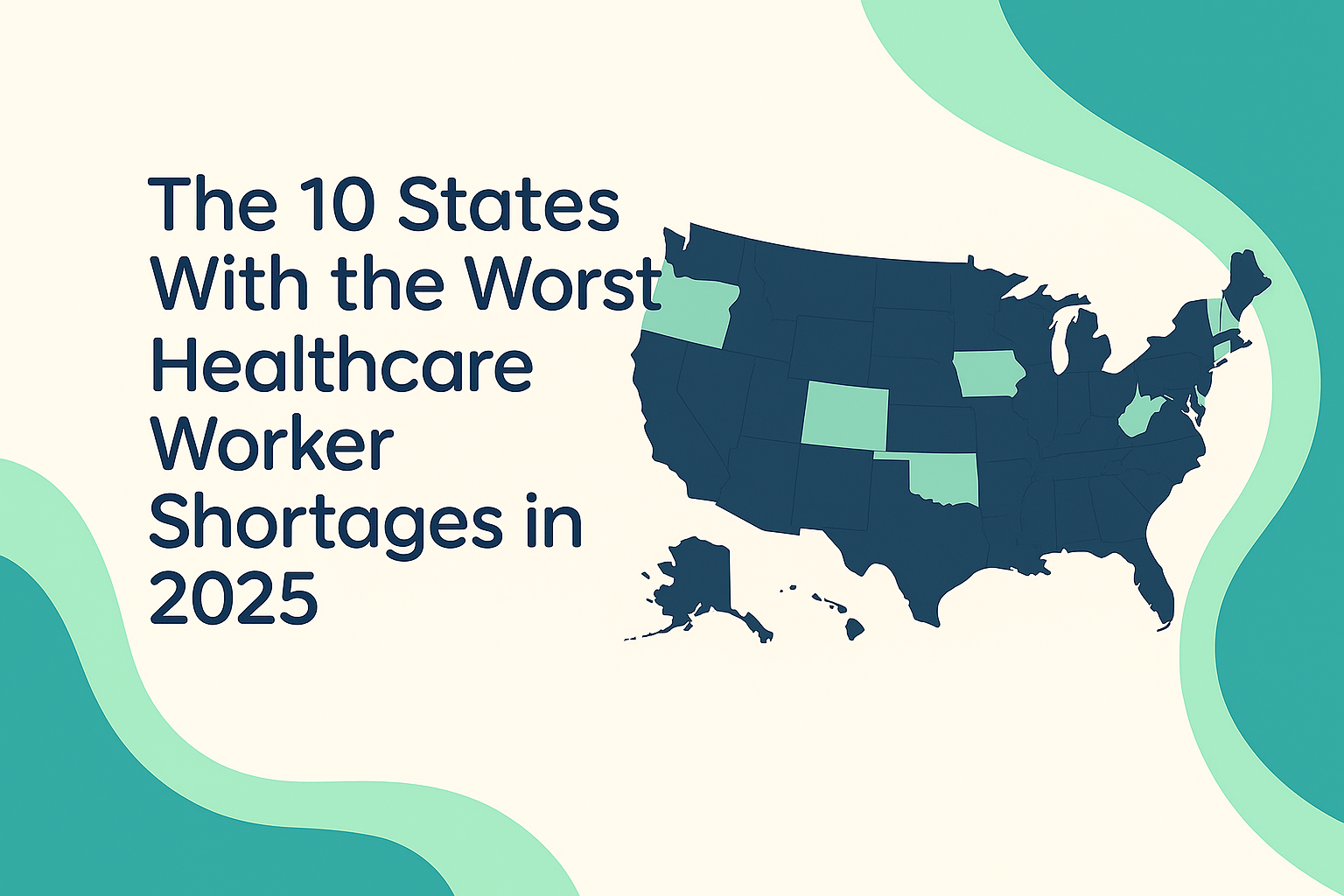
Nevadans have the fewest healthcare workers to rely on, with just 24 medical professionals serving each group of 1,000 residents across the state.
Healthcare worker shortages are strongest in the West, which is home to the five most understaffed states in the US.
Florida has twice the population of Georgia but the same share of healthcare professionals, leaving local medical staff with a much heavier workload.
With patient wait times for medical appointments now averaging 26 days across the US, healthcare staffing shortages are becoming a serious public issue. The healthcare AI startup Ubie Health recently did a study to identify the states that need medical workers the most in 2025.
The research examined several healthcare indicators, such as the number of medical workers per 1K residents, total healthcare jobs per 1K people, and location quotients that measure healthcare employment concentration compared to national averages. States were then ranked on a Healthcare Worker Need Index, with higher scores indicating greater staffing shortages.
Here's a look at the 10 states with the most critical healthcare worker shortages in 2025:
State | Population | Total Healthcare Employment | Healthcare Workers per 1,000 People | Location Quotient | Total Number of Healthcare Jobs per 1,000 people | Health Worker Need |
Nevada | 3,320,570 | 80,480 | 24 | 0.91 | 53 | 100 |
Utah | 3,564,000 | 93,720 | 26 | 0.86 | 55 | 98 |
Wyoming | 590,169 | 15,340 | 26 | 1.00 | 55 | 96 |
Colorado | 6,013,650 | 163,880 | 27 | 0.89 | 57 | 94 |
Hawaii | 1,450,900 | 37,220 | 26 | 1.20 | 60 | 92 |
Georgia | 11,297,300 | 297,220 | 26 | 1.07 | 61 | 90 |
Florida | 23,839,600 | 629,290 | 26 | 1.01 | 64 | 88 |
Virginia | 8,887,700 | 260,700 | 29 | 0.89 | 64 | 86 |
Alabama | 5,197,720 | 141,810 | 27 | 0.97 | 68 | 84 |
Arizona | 7,691,740 | 228,190 | 30 | 1.11 | 71 | 82 |
You can access the complete research findings here.
Key Takeaway
Nevada ranks first in America for healthcare worker shortages. With just 24 healthcare professionals per 1K residents, Nevada falls significantly below the national average. The state's population of 3.3M has outpaced its healthcare workforce development, as only 80K healthcare employees currently serve the entire state. This also means that Nevada has America’s fewest types of medical roles and specialties available to patients.
Utah takes second place on the healthcare shortage index. Utah's 3.56M residents rely on 94K healthcare workers, meaning there are only 23 medical professionals available for every thousand residents. With this, the state shows that it has 14% fewer workers than would be expected based on national medical staffing trends.
Wyoming is next with the third-largest healthcare worker deficit in America. For every thousand residents, there are only 26 medical personnel here. Wyoming struggles with patient care specialization too, with just 55 medical roles serving the same size group.
Colorado ranks fourth in healthcare staffing problems. The state's 6M residents have access to a total of 167K clinical workforce. Colorado's medical system also shows a location quotient of 0.89, meaning it employs 11% fewer healthcare workers than the national benchmark.
In the sixth place is Hawaii, where 37K doctors are responsible for the care of 1.45M residents. That leaves a small pool of specialists to service such a large population. The variety of medical jobs in Hawaii is also thin (60 jobs per thousand residents), giving locals fewer options for specialists and services.
Georgia ranks sixth in the healthcare staffing gap. Here, 11.3M people depend on around 297K healthcare workers. Like Hawaii, Georgia also struggles with a low range of medical roles, leaving patients with limited specialized care.
Florida lands in seventh place despite registering the largest healthcare human resources in the top 10. The state has 629K health professionals available for its 23.8M residents. This means Florida reports the same healthcare personnel ratio as Georgia, despite having twice the population.
Virginia takes eighth place, showing 29 healthcare workers for every thousand citizens. The state counts 8.9M residents who have access to a total of 260K physicians. This proportion indicates that Virginia provides 11% fewer healthcare workers than the national pattern would suggest.
Alabama ranks ninth in healthcare worker shortfall. Here, a medical workforce of 142K serves 5.2M residents. Alabama's location quotient of 0.97 indicates it is close but still below the national average for healthcare staffing patterns.
Arizona completes the top 10 states with the strongest healthcare deficit. There are 228K medical professionals here, serving 7.7M people. This proportion translates to 27 physicians for every thousand residents, placing Arizona still below most of the other states.
"The real story behind healthcare workforce shortages is that millions of Americans can't get the care they need when they need it," says Kota Kubo, CEO and co-founder at Ubie Health. "When states lack enough healthcare workers, we see longer wait times, shorter appointments, and more stressed medical staff. So this isn't just a problem for patients: it drives burnout among doctors and nurses too. Without action, these shortages will only get worse as our population ages and healthcare needs grow."
Author

Jake Bronstein
Ubie Global Marketing

Customer-obsessed brand marketing, social, and content leader—equally parts thinker and doer (strategy and execution)—with a track record of accelerating business growth through insight-led omnichannel storytelling, marketing innovation, and leadership.